How to Track the Execution of Auto Branding/Advertising in Real Time
Track auto branding campaigns in real time with geo-fencing, AI photo verification, WhatsApp proof submission, and live dashboards. Ensure zone compliance and prevent execution fraud.
Auto branding involves wrapping auto with brand graphics. This method is one of the most noticeable and commonly used Below-The-Line (BTL) advertising formats in India. It effectively reaches consumers on the go, penetrates local neighborhoods, and provides repeated impressions in high-traffic areas.
Are the vehicles operating in the approved zones? Are the photos real or reused from a previous campaign? Is the coverage spread across the planned areas or concentrated in one location? Without a proper tracking system, these questions can only be answered after the campaign ends, when it’s too late to fix anything.
This guide outlines how real-time tracking for auto branding campaigns works, who needs it, how to implement it step by step, and how to tackle the common challenges that arise.
Who Should Implement Real-Time Auto Branding Tracking?
Real-time tracking is not just for large companies. Any organization investing money in auto or transit branding and expecting accountability should have a tracking system in place.
Brand and marketing teams running city-level or national auto branding campaigns need real-time proof that the execution is happening as planned, in the right zones, and with the correct creatives.
BTL and media agencies managing execution through third-party vendors or gig teams require a system to verify delivery and provide reliable proof of work for clients, without spending hours compiling reports manually.
Marketing heads and CMOs responsible for offline media budgets need data-driven performance visibility without chasing field teams for updates.
Field operations managers overseeing multi-city campaigns need a single view to see which locations are progressing on schedule and where execution has stalled.
Audit and compliance teams that verify campaign delivery need location and time-stamped proof without having to visit every route or vehicle in person.
A Bird's Eye View of the Real-Time Auto Branding Tracking Process
Real-time auto branding tracking functions through a continuous loop of task assignment, field submission, automated verification, and live reporting. Here’s how it works:
1. Campaigns are divided into individual trackable units one task per vehicle or branding unit.
2. Field executors receive task instructions and submit photo proof along with GPS location directly from their phones.
3. The system automatically verifies submissions for location accuracy, time of capture, and photo authenticity.
4. Non-compliant or suspicious submissions are flagged immediately for review.
5. A central dashboard displays live task status, geographic coverage, and overall campaign progress.
6. Reports can be generated at any time during the campaign, not just at the end.
Step-by-Step Guide to Implementing Real-Time Tracking for Auto Branding
Step 1: Structure Your Campaign as Trackable TasksEvery auto covered with ads is recorded as a task, ensuring proper proof submission and verification.
Step 2: Configure Operational Zones Using Geo-FencingSet defined campaign boundaries with geo-fencing so out-of-area submissions are automatically flagged and addressed immediately.
Step 3: Enable WhatsApp-Based Submission for Field TeamsField teams can submit photo proof via WhatsApp, eliminating the need for app installation or training.
Step 4: Real-Time Submission VerificationEvery submission is checked instantly for location accuracy, duplicate photos, and time compliance.
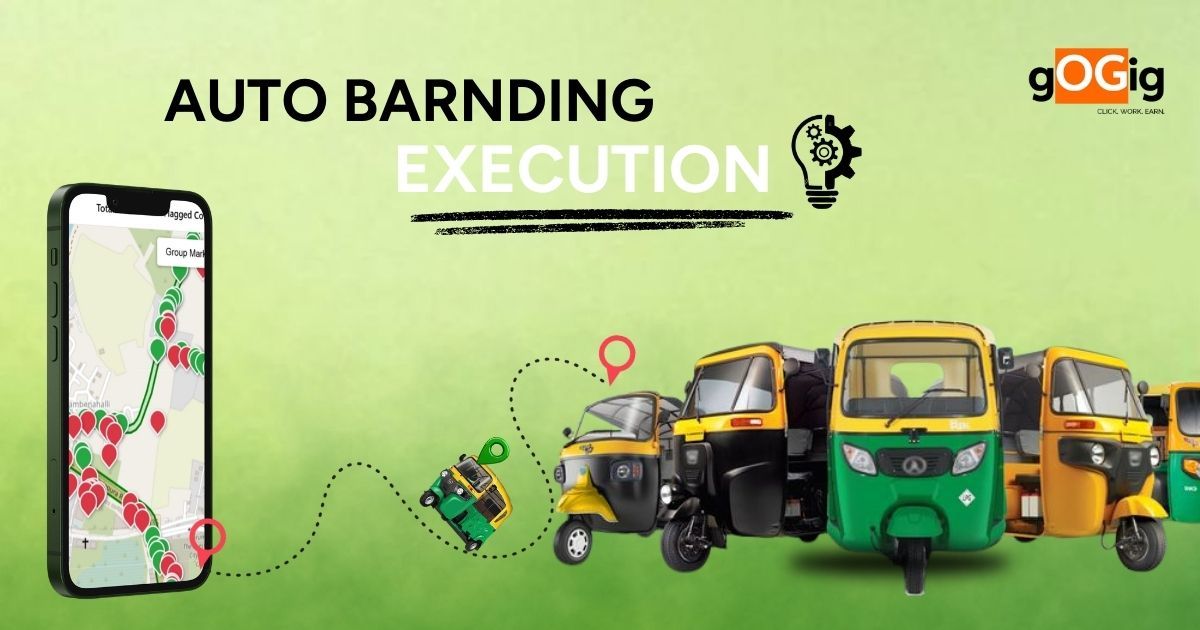
Step 5: Monitor Live Progress on a Central DashboardTrack all vehicles live pending, in progress, completed, and flagged from one view.
Step 6: Generate Reports On DemandDownload verified campaign data immediately, without manual compilation or post-campaign presentations.
Common Tracking Challenges and Solutions
Challenge: Fake or reused photosSolution: Automated duplicate detection and AI-based image verification flag submissions that may be recycled from earlier campaigns or locations. Geo-tagged metadata adds another layer of confirmation.
Challenge: Vehicles operating outside the approved zoneSolution: Geo-fencing configured at the route or zone level flags any submission from outside the boundary immediately, allowing your team to follow up with the vendor before the day ends.
Challenge: Low engagement from gig workers and auto vendorsSolution: Using WhatsApp for submission removes the need for app installation or training. Since field teams are already familiar with WhatsApp, adoption happens naturally and without resistance.
Challenge: Managing multiple cities and vendors from one placeSolution: A centralized command dashboard with smart filtering by city, campaign name, and zone lets operations managers monitor all regions without switching between tools or chasing updates across WhatsApp groups.
Tips for Optimizing Real-Time Tracking Processes
- Set up geo-fencing before the campaign starts, not after the first complaint comes in. Configuring zones takes time and should be part of your pre-launch checklist.
- Clearly define compliance criteria at the task level. If a photo must show the entire vehicle with the creative visible in natural light, document that standard so the verification system can consistently flag deviations.
- Use the map view daily. It's easier to spot geographic coverage gaps visually than in a spreadsheet. A quick review of the live map each morning indicates areas with thin execution.
- Share live dashboard access with clients. Granting clients read-only access to real-time campaign progress builds trust and reduces requests for status updates.
- Monitor creative compliance alongside location compliance. When creative changes occur mid-campaign, verify that updated visuals are applied correctly across all vehicles.
Next Steps After Tracking Auto Branding Executions
Tracking execution is just the start of a feedback loop that strengthens every future campaign.
Review your verified data by zone: Identify areas that delivered the highest coverage and those with consistent gaps. Use this information to renegotiate vendor agreements or reallocate budgets for the next campaign.
Close the loop with vendors: Share flagged submissions with the relevant vendor and document recurring issues. Vendors aware that execution is being tracked in real time are more likely to perform reliably.
Build a proof-of-execution repository: Every verified submission becomes part of your campaign archive. This is valuable for client reports, future campaign comparisons, and resolving disputes.
Scale across formats: Once you have real-time tracking working for auto branding, the same system can easily extend to retail branding, society activations, event installations, and other BTL formats, all from the same central platform.
FAQs About Real-Time Auto Branding Tracking
- Can field executors use the tracking system without downloading an app? Yes. Modern BTL tracking platforms like gOGig allow executors to submit proof directly through WhatsApp. No app installation is required, significantly improving adoption among gig workers and auto vendors.
- How does the system detect fake or reused photos?The platform combines automated duplicate detection with AI-based image verification. Each submission is checked against previous ones for similarity. GPS metadata and timestamps provide additional verification that the photo was taken at the right location and time.
- Is real-time tracking only useful for large campaigns?Not at all. Even a campaign with 50 vehicles across two cities benefits from structured tracking. The value lies in verified proof of execution, preventing fraud, and live visibility, none of which are exclusive to large campaigns.
- Can clients be given access to track campaign progress?Yes. Most real-time tracking platforms allow you to provide clients with access to the dashboard so they can monitor execution progress independently. This reduces the need for status calls and promotes transparency in the client relationship.
- How quickly can issues be identified and fixed?With real-time tracking, issues are flagged as soon as a non-compliant submission is made. Operations teams can identify and address problems on the same day, instead of discovering them in a post-campaign audit.
Key Takeaways
- Auto branding campaigns without real-time tracking leave agencies and brands in the dark. Photos come in late, zones go unchecked, and fraud is only discovered after money has been spent.
- Real-time tracking works by turning each branding unit into a structured task, collecting geo-tagged and time-stamped proof from the field, and verifying submissions automatically.
- WhatsApp-based submission removes the adoption barrier for field teams, making the system practical for gig workers and auto vendors without training requirements.
- Geo-fencing, automated verification, and duplicate detection together eliminate the most common types of execution fraud in transit branding.
- A centralized dashboard with smart filters makes it feasible to manage multi-city, multi-vendor campaigns from a single view.
- Tracking is not a one-time setup. The data generated becomes the basis for vendor accountability, client reporting, and ongoing campaign improvement.